NATIVE X IRISH DESIGN WEEK
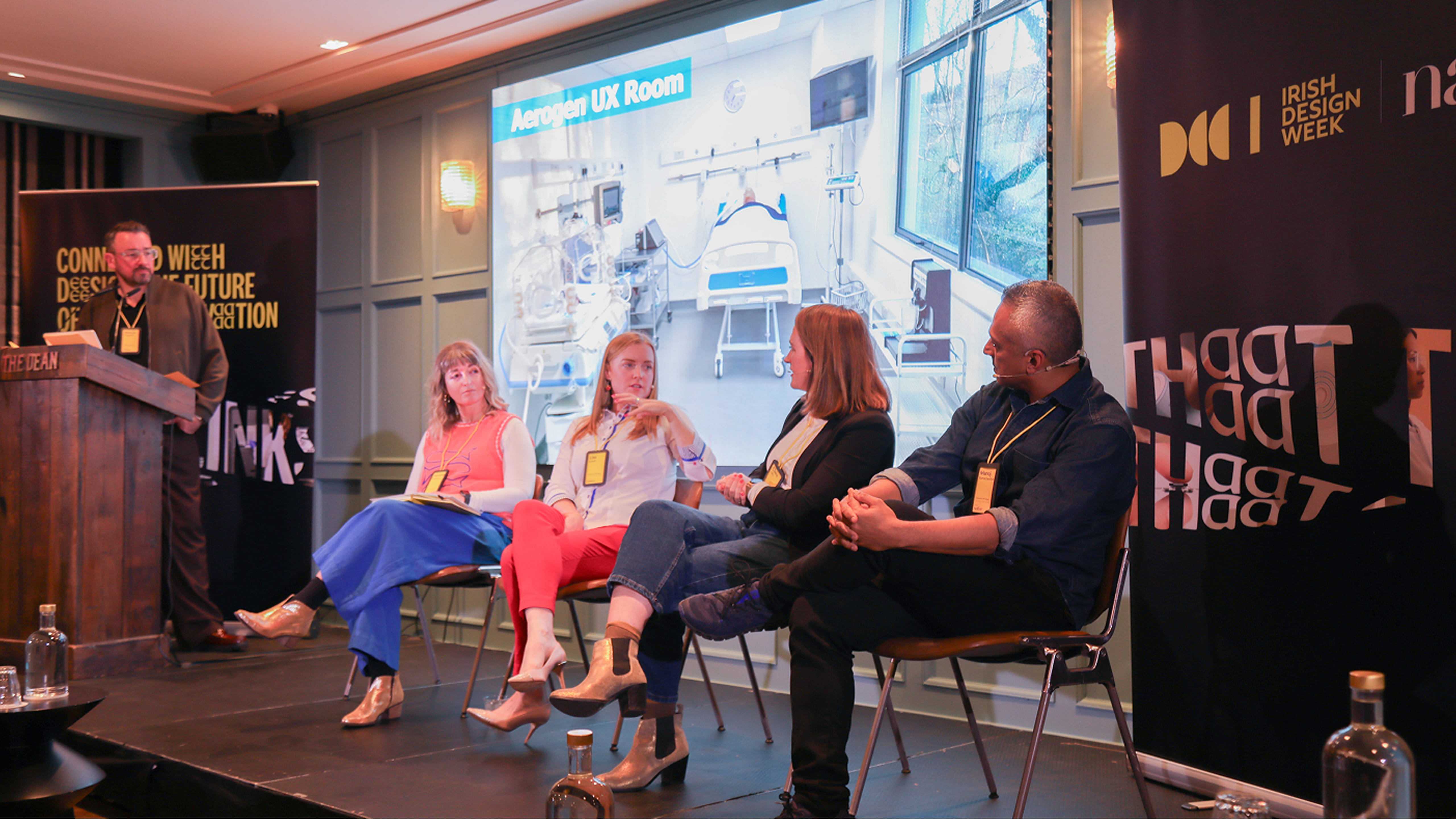
With Marcus Hoggarth, President and Chief Creative Officer at Native, moderating the panels, we set out to explore how insight, design and technology can work together earlier in product development, opening the kinds of conversations that rarely happen in the same room. From how to involve the right clinical and user experts from the outset, and how AI can support more connected products and more intelligent, predictive care.

Muireann McMahon
Associate Professor in Design & Researcher at School of Design
“The planet and people are inseparable. Design should move both forward together.”

Lisa
Lynch
Senior Manager R&D
“Real insight comes when physicians step into the lab and handle every detail. Those moments reshape how devices need to work.”

Claire
Lillis
Senior Manager, User Experience
“It is easy to see bad design, but much harder to get good design right. You only achieve it when you involve everyone who touches the device.”

Manoj Ramachandran
Consultant Paediatric Orthopaedic & Trauma Surgeon, Co-founder
“AI is already embedded in care. The challenge is designing systems that fit the workflow and genuinely change outcomes.”
Dr. Sinead Walsh
Programme Director
“You cannot design for today alone. You have to understand where care, technology and patients will be in the next decade.”

Gerry
Clarke
Co-Founder & Former CTO
“The most powerful ideas come from observing real problems in real clinical settings, not what you imagine in the lab.”
Eliot Salandy Brown
AI Director
“Companies do not need more strategy for AI. They need design to turn fragmented experiments into a coherent vision.”

Schirin Dilmaghani
Senior Designer
“The right technology only emerges when you fully understand the person, their context and their emotional reality.”
Across the evening, we heard the value of involving clinicians, patients and wider teams earlier so solutions reflect real needs. We also heard how design helps turn insight into clarity and align decisions, and how AI must be applied with purpose to create meaningful improvements in workflow, communication and prediction.
Design’s position in healthcare is evolving from something added late to near-ready solutions, to a core discipline throughout the innovation process. Ambitious innovators are locating design alongside engineering, clinical insight, and commercial strategy from the start, shaping not just the product, but the holistic and multi-dimensional solutions that surround it.
Call to action
Bring design upstream - into strategy, clinical discovery, product definition, and technical architecture - where it can help ensure the right things get built, in the right way, for the right reasons.
“We see that design isn’t something that happens at one point. It has advocates at every step - including at the investor level.”
Dr. Sinéad Walsh, Programme Director, BioInnovate
Many healthcare innovation challenges come from fragmentation. Engineering teams build. Clinical teams validate. Business teams commercialise. Regulatory teams contain risk. Data teams manage signals... in relative isolation.
Design is being used to connect and integrate, working across boundaries, translating between science, systems, behaviour, technology and emotion.
Call to action
Create teams and programmes that are explicitly cross-functional from day one. Treat design as an operating layer between technology, patient behaviour and organisational silos.
“The challenge isn’t the technology. It’s that organisations themselves are siloed - and data just creates more noise unless you design how it flows and where it lands.”
Gerry Clarke, Co-Founder & Former CTO
Big ideas for transforming care with AI are sometimes blocked by regulation. But they also often blocked by internal hesitation.
AI is “for later”.
AI is “not ready”.
AI is “someone else’s job”.
AI is here. Panellists suggested the organisations moving fastest with AI are not the smartest, they are the bravest.
Call to action
Commit to actually shipping intelligence, not more internal experiments. Move from pilots to products. Design AI into real-world workflows and devices - not as an add-on, but as a core behaviour of the system.
“We had to go through the FDA, get reimbursement codes, deploy at scale - all of that is already done. The issue now isn’t permission. It’s imagination.”
Prof. Manoj Ramachandran, Consultant Paediatric Orthopaedic & Trauma Surgeon, Co-founder, Viz.ai
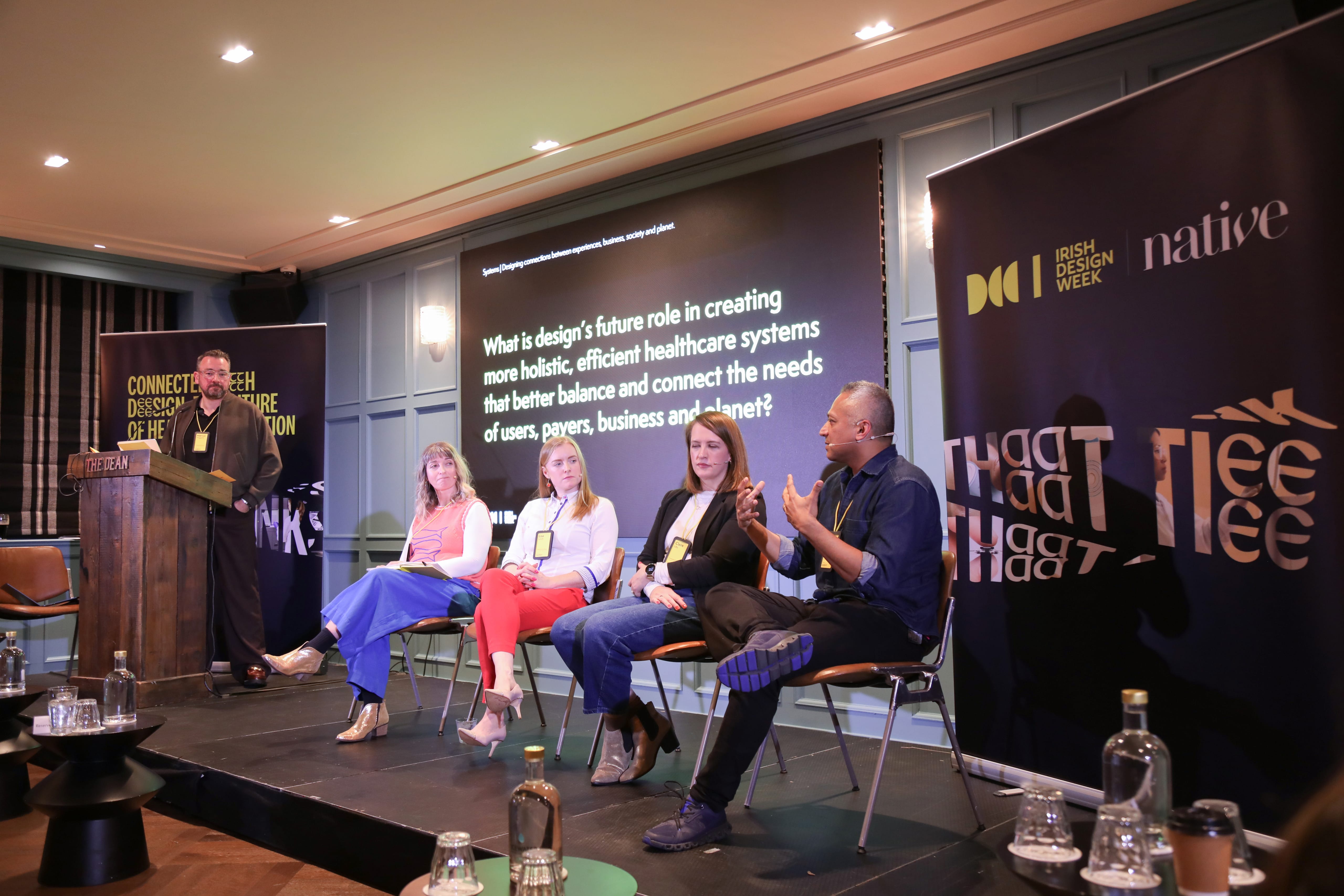
The real impact of AI won’t come from its digital, background and internal applications alone, but embedding it into the real physical world of care - inside care settings, devices, workflows, and everyday moments between professionals and patients.
Some are prioritising practical and actionable real-world intelligence - removing friction, guiding hands in theatre, spotting failure before it happens, helping people communicate.
Call to action
Stop thinking of AI as a digital feature. Start designing intelligence into the environments, tools, and pathways people work with every day - where it can reduce effort, prevent mistakes, and quietly transform outcomes.
“We increasingly see AI as helpful in practical problem-solving in the real world, not just in data or theory.”
Dr. Sinéad Walsh, Programme Director, BioInnovate
Large organisations are often slow to innovate. But in reality, they are capable of extraordinary innovation - but only when ambition is sharp, ownership is clear, and partnerships are deliberate.
Call to action
Replace isolated R&D with integrated co-development. Choose partners for capability, not convenience. Build with clinicians, designers and engineers in the same room - not sequentially.
“As soon as Medtronic got involved, everything changed for the better.”
Prof. Manoj Ramachandran, Consultant Paediatric Orthopaedic & Trauma Surgeon, Co-founder, Viz.ai
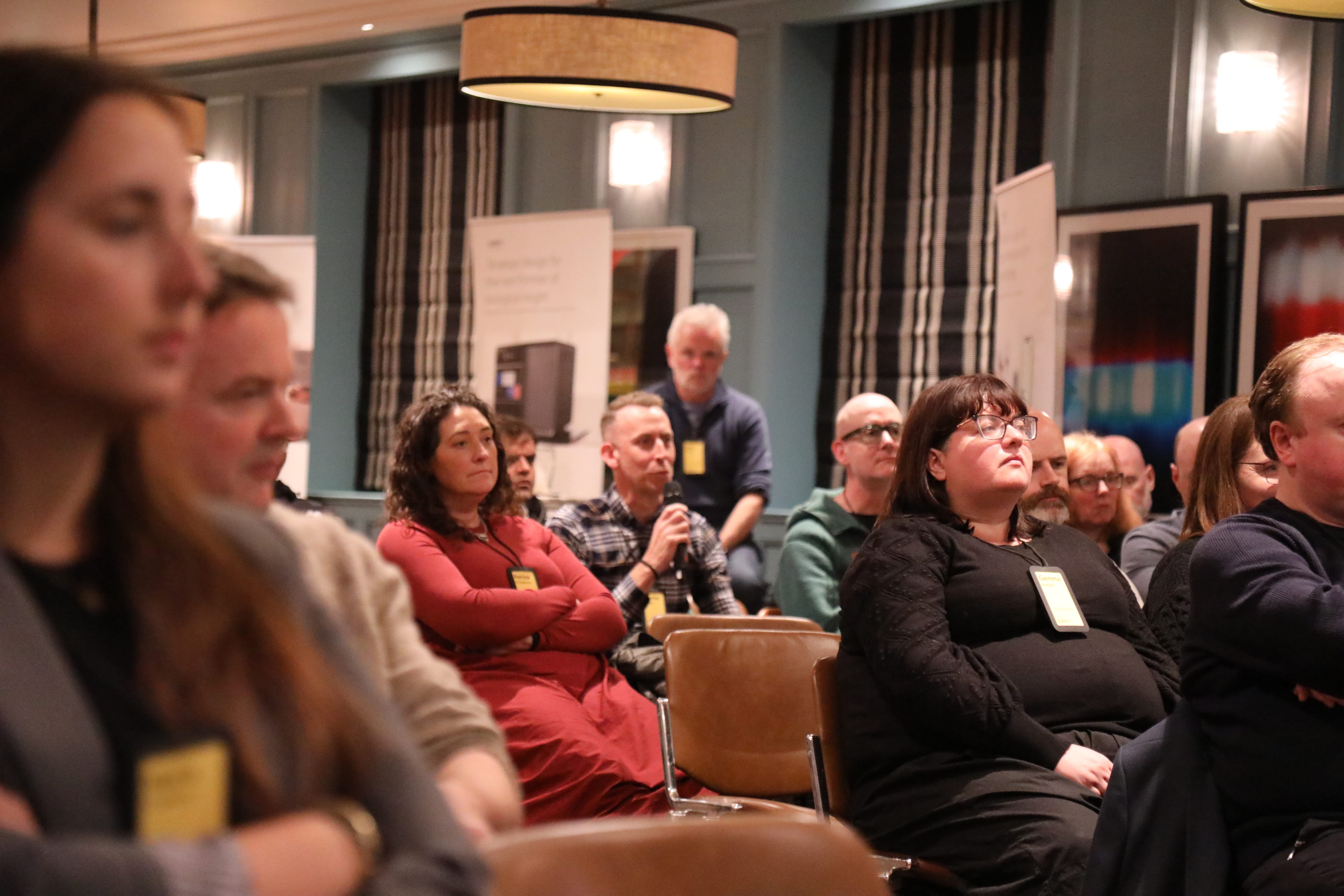
This event highlighted a clear appetite for new ways of working, where insight, design and technology move together from the start. It also showed the opportunity to create healthcare solutions that are more connected, more human and better enabled by intelligent technology.
“Tonight’s conversation showed what happens when disciplines come together. Large organisations can lead the next phase of innovation when they bring design, technology and clinical insight together from the start.”
Marcus Hoggarth, President & Chief Creative Officer, Native
If your organisation is exploring how to apply these ideas, from refining product direction to shaping AI enabled experiences or building connected portfolios, we would be glad to continue the conversation.
Contact us: Hello@native.com

We collect anonymous data from your visit to native.com to help improve our website.
For more information, please see our Privacy page.